1
Notice
What happened? Who helped? What good thing, kind action or useful object was part of the moment?

Parent and Teacher Guide
Gratitude is more than remembering the words “thank you”. For a child, it can begin with noticing that someone helped, something mattered or a small part of the day felt good. From there, children can learn to understand why it mattered and choose how they want to show appreciation.
The short answer
A child might feel grateful because a friend made room for them, somebody cooked dinner, a teacher helped with a difficult problem, a borrowed toy was fun to use or rain helped the garden grow. Gratitude can be expressed with words, but it can also appear through care, memory and thoughtful action.
A simple four part idea
Children do not need to use these exact words. They give grown ups an easy way to move beyond a quick “say thank you” reminder.
What happened? Who helped? What good thing, kind action or useful object was part of the moment?
Why did it matter? Did someone use their time, effort, knowledge or care to make something easier or better?
What did the child feel about the moment? Warm, relieved, happy, surprised or simply pleased that somebody noticed?
A response might be saying thank you, writing a note, caring for something borrowed or helping in return when it feels natural.
More than manners
Saying thank you is an important social skill and one useful way to express appreciation. Sometimes children need reminders while the habit is still developing.
Gratitude also involves noticing what was received, understanding why it mattered and sometimes choosing a response that goes beyond the words themselves.
See gratitude in a story
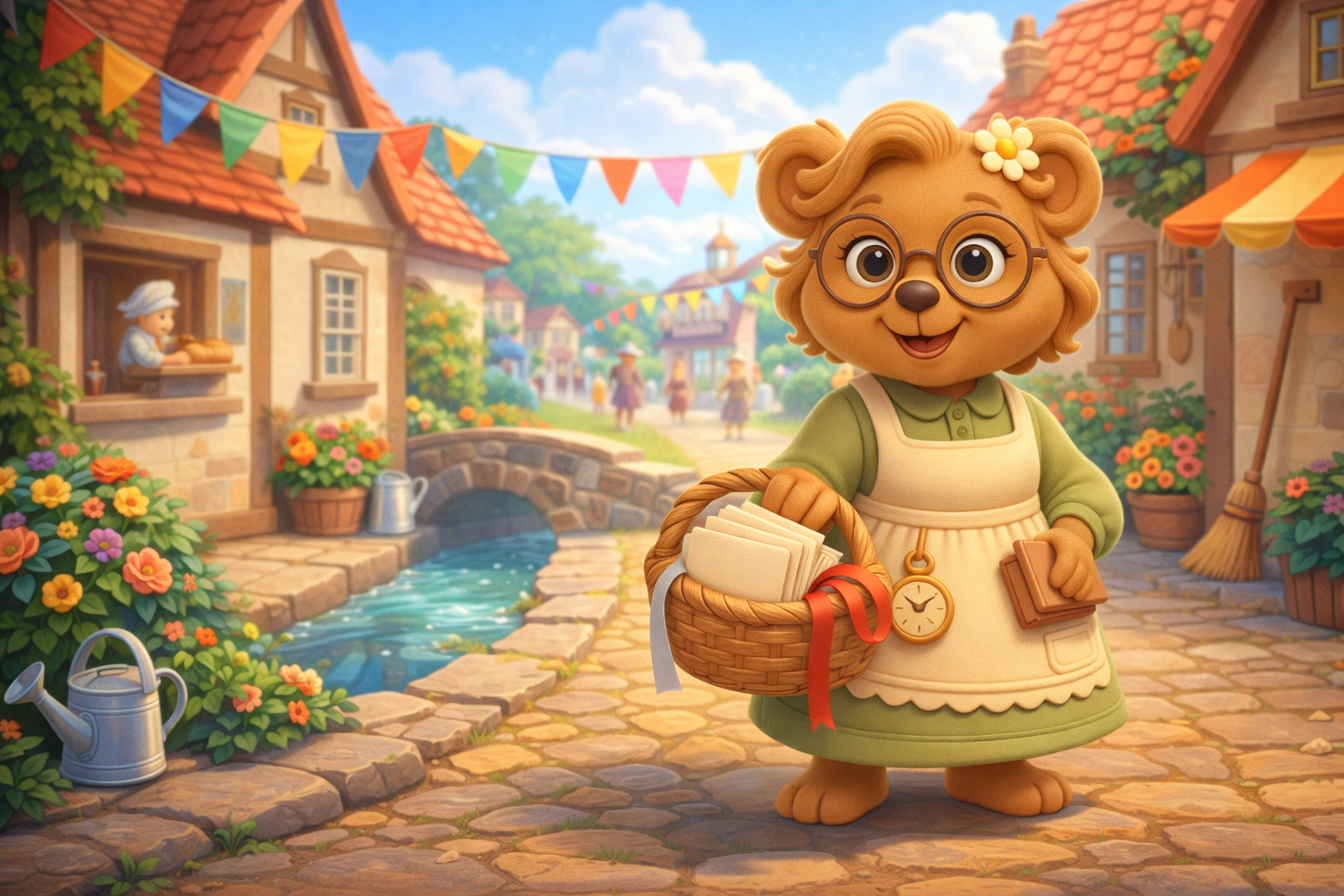
Bea carries blank thank you cards through Paddington during the Bright Day Parade. She notices warm bread from the baker, helps a shopkeeper make a slippery path safe and begins to see how many small jobs hold a community together. Her gratitude moves from words into attention and helpful action.
Everyday examples
“Dad fixed my bike even though it took ages.” The child is beginning to notice the effort behind the result.
“She saved me a seat.” Gratitude can begin with noticing a small act that made a difficult moment easier.
Returning a borrowed book carefully can show appreciation even when the child has already said thank you.
A child can notice cleaners, delivery workers, crossing guards, shopkeepers or neighbours whose work often happens without applause.
A cool breeze, a shady tree, rain for the garden or a favourite place to play can become simple gratitude moments.
Gratitude may appear when someone forgives, explains again or gives the child room to repair what went wrong.
An important distinction
A child can appreciate one part of a situation and still be disappointed, worried, tired or frustrated about another part. Gratitude works better as noticing than as a demand to “look on the bright side”. The aim is not to erase difficult feelings. It is to help children recognise good things honestly when those things are really there.
Conversation starters
Pick one. The questions work best as invitations rather than tests with a correct answer.
Explore the trait
This guide links into the existing TinyTales Gratitude network rather than duplicating the Gratitude story collection.
Explore the complete Gratitude trait collection with connected stories, characters and activities.
Explore Gratitude →Tumbletide is the main TinyTales character connected to Gratitude, thankfulness and noticing meaningful gifts.
Meet Tumbletide →Bea notices the everyday people and small acts that make Paddington feel cared for and connected.
Meet Bea →Use gentle real life prompts to notice and celebrate everyday gratitude moments with children ages 3 to 10.
Play the Free Gratitude Jar →Find words that help children notice and remember everyday gifts in a free online word search.
Play the Free Word Search →Preview a Gratitude colouring activity where Tumbletide remembers the little gifts that helped along the way.
Preview the Colouring Activity →Begin a Paddington Place Mission where children explore gratitude, community helpers, safe choices and helping after mistakes.
Try the Gratitude Place Mission →Turn TinyTales stories into calm conversations about feelings, choices and character traits at home or in class.
Explore Discussion Support →Frequently asked questions
Gratitude for kids means noticing something good, helpful or meaningful, understanding why it matters, and showing appreciation through words, care or thoughtful action.
Saying thank you is one way to express gratitude, but gratitude can go further. A child may notice the effort behind a gift, remember someone who helped, care for something they borrowed or choose an action that shows appreciation.
Use concrete examples. Talk about a person who helped, a favourite meal, a warm coat, a pet, a shared toy or a small part of the day that felt good. Then ask what made that moment helpful or meaningful.
Gratitude is more useful when children have space to notice and express it honestly. A child can appreciate something and still feel disappointed, tired, worried or frustrated about something else.
The examples are designed mainly for children ages 3 to 10. Younger children can begin with simple noticing and thank you moments, while older children can explore effort, intention, community help and gratitude through actions.
Read Bea and the Thank You Trail, then ask one simple question about a person, object or ordinary moment that made the day a little better.